
From Participation to Collective Power: How Women Build Organisations and Movements

Listen on


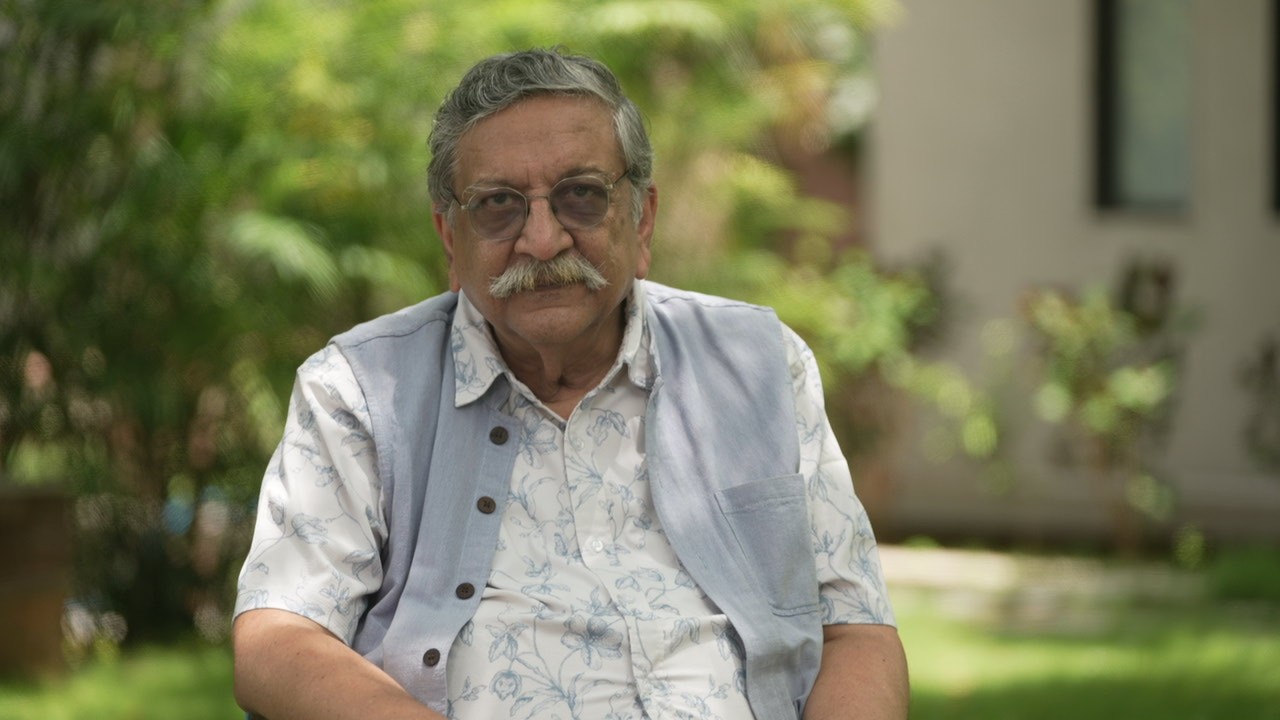
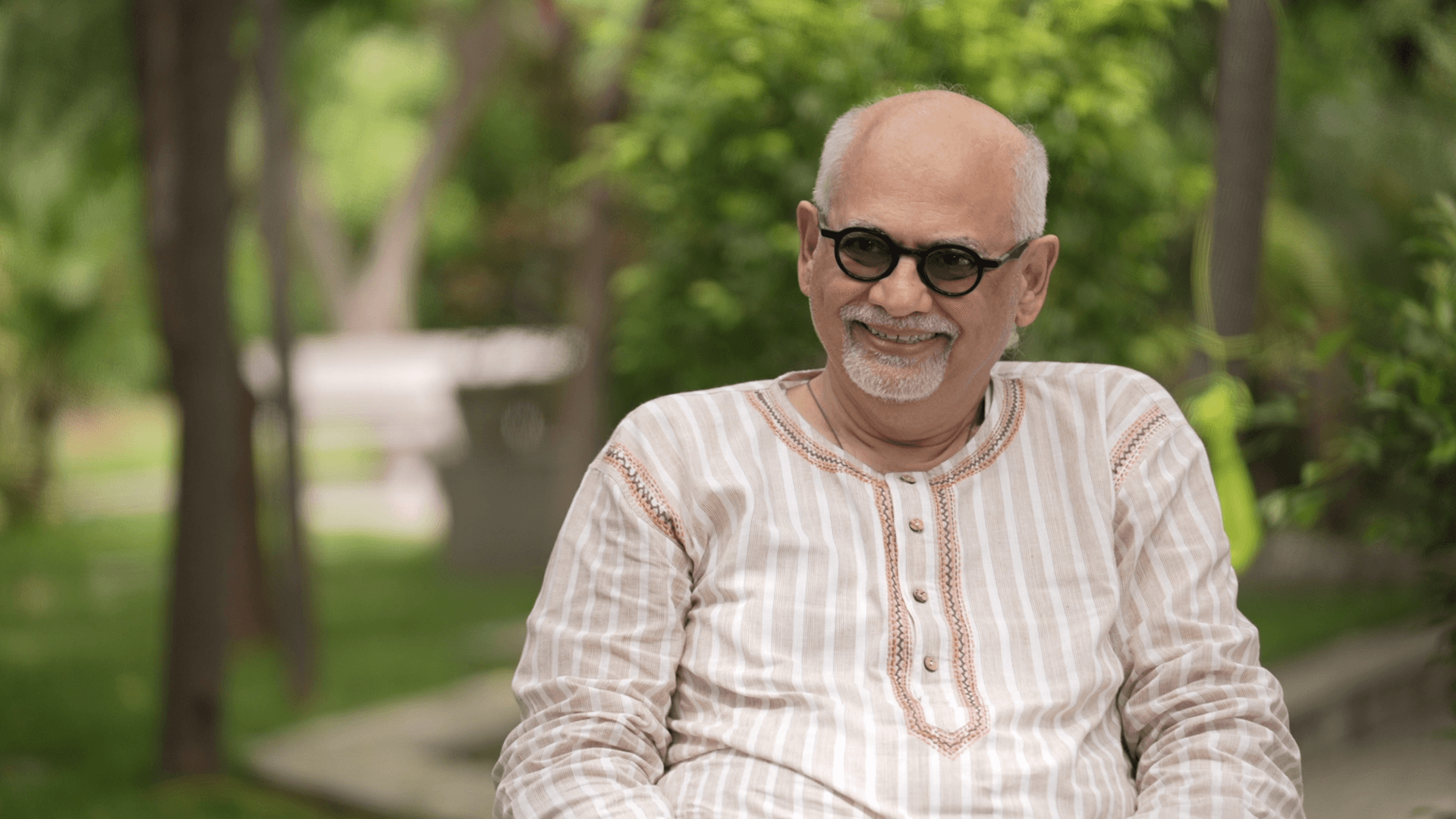
This episode of Unmute, hosted by Gagan Sethi and Minar Pimple, examines the evolution of grassroots women’s organising in Panchmahal and Dahod, Gujarat, through a conversation with Neeta Hardikar and Guliben, Shaniben and Champaben, leaders of three women-led collectives supported by ANANDI. Tracing the journey from Mahila Samakhya to autonomous women’s collectives, the conversation explores how everyday concerns around livelihoods, food, social security, violence, entitlements and local governance can become the basis for collective action, leadership and rights-based organising.
The episode also reflects on the relationship between grassroots collectives and wider movements, including the Right to Food movement, NREGA Sangharsh Morcha and Pension Parishad, alongside the challenges of sustaining collective spaces amid changing forms of violence, communal polarisation, shrinking livelihood opportunities and generational shifts. At its core, the conversation examines the role of women-led organisations in building collective power, strengthening democratic participation and nurturing the next generation of grassroots leadership.
About ANANDI Organisation
ANANDI in Gujarati signifies Joyfulness and it is our endeavour that all our struggles and work help make this world a joyful place for all. ANANDI’s vision is to bring rural women’s concerns in the centre of all development processes so that all can live in a just, equitable and peaceful society. Values of justice freedom and fraternity guide the mission of promoting women and young leaders to work towards social justice, sustainable development and accountable governance. Building and strengthening rural women led community-based organisations for sustainable livelihoods, rights and entitlements and violence free society for women, youth and children from tribal, Dalit, de-notified tribes and other marginalised communities are core areas of ANANDI’s work since 1995.
Key Insights from the Conversation
I. From Empowerment Programmes to Autonomous Collective Power
Empowerment cannot be separated from collective organising
The experience of Mahila Samakhya provided an important foundation for the women who later built ANANDI. Yet the programme also revealed the limits of an approach in which the State defines what empowerment should look like. Women were given a space to participate, but the boundaries of that participation were often predetermined. This experience led to a deeper understanding: women’s empowerment requires not only access to programmes and entitlements, but the ability to come together, define their own concerns and collectively decide what action to take.
Everyday problems can become political questions
The shift towards grassroots organising began by taking women’s everyday concerns seriously. Questions around water, food, Anganwadi services, land, employment and violence were not treated as separate from the larger political agenda. Instead, these experiences became the starting point for collective action. The conversation emphasises that understanding one’s rights becomes meaningful when people also develop the confidence and collective strength to act on those rights.
Rights and empowerment need to work together
The discussion draws a distinction between a rights-based approach and an empowerment approach, while arguing that neither is sufficient on its own. Accessing a government entitlement may resolve an immediate problem, but it does not necessarily create lasting agency. At the same time, collective empowerment without the ability to claim institutional rights can leave people without meaningful remedies. ANANDI’s work emerged from an attempt to bring these two approaches together: understanding rights, organising around them and building women’s leadership in the process.
II. From Private Struggles to Public Leadership
Collective spaces can transform fear into leadership
The personal accounts of Guliben, Shaniben and Champaben illustrate the gradual process through which women began to move beyond the restrictions placed on them within their families and communities. For women who had spent much of their lives within the home, joining meetings, speaking publicly or travelling outside the village could itself be a significant act. Collective spaces provided not only information but the confidence to question existing expectations and imagine a different role for themselves.
Economic autonomy can be a first step towards collective strength
The women’s experiences show how seemingly small interventions, such as beginning savings with a rupee, forming groups, opening bank accounts or accessing loans, can become part of a much larger process of empowerment. Economic activities and savings created opportunities for women to negotiate within their families while also building relationships with other women. Over time, these groups became spaces through which women could address questions extending far beyond livelihoods.
Leadership grows through participation, not designation
The conversation repeatedly returns to the idea that leadership cannot simply be assigned to women. It develops through experience: attending meetings, participating in campaigns, speaking to officials, supporting another woman, performing street plays, raising questions in the panchayat and taking responsibility for collective action. One of the clearest signs of this transformation is the emergence of women who now aspire to contest panchayat elections and take on formal political leadership themselves.
III. Women, Campaigns and Rights-Based Politics
Grassroots organisations and wider movements strengthen each other
ANANDI’s experience demonstrates a two-way relationship between local organisations and larger campaigns. Campaigns such as the Right to Food movement, NREGA Sangharsh Morcha, Jan Swasthya Abhiyan and Pension Parishad gave grassroots organisations a larger political platform, while experiences from villages helped shape the demands and priorities of these wider movements. The conversation describes this relationship as mutually reinforcing: organisations gain strength from campaigns, while campaigns gain substance and legitimacy from grassroots experience.
Food security is also a question of women’s rights
The Right to Food campaign is discussed not simply in terms of access to grain but through the everyday realities of women and families experiencing poverty and migration. The demand for food security was connected to questions of nutrition, the availability of diverse foods, women’s role in managing household food security and the need to move beyond narrowly targeted approaches. The discussion highlights how demands emerging from villages can eventually enter national campaigns, policy debates and legislation, including the National Food Security Act.
The right to work can determine the economic security of rural women
For women in rural areas, employment is closely tied to food, migration, education, household survival and economic independence. The conversation reflects on the role of NREGA in providing a source of income within villages, particularly during the COVID-19 period, and on the importance of women being able to demand work rather than depending entirely on informal labour or migration. The weakening of the employment guarantee, delayed payments, technological barriers and reduced budgets are therefore understood as issues that directly affect women’s lives.
Social security struggles turn individual cases into collective demands
The work around widow pensions and other social security entitlements illustrates how organisations can turn individual experiences into collective advocacy. What begins as one woman asking why her pension has stopped can develop into a broader understanding of how eligibility rules, administrative processes and inadequate pension amounts affect hundreds of women. Through campaigns such as Pension Parishad, these local experiences become part of a larger demand for universal and meaningful social protection.
IV. Deepening Democracy at the Local Level
Women’s spaces can change what happens in the Gram Sabha
The discussion highlights the importance of creating spaces for women and young women to meet before the Gram Sabha. These meetings allow women to discuss their concerns collectively, prepare petitions and develop the confidence to raise issues in formal public forums. The process changes the Gram Sabha from a space where women may be present but silent into one where elected women representatives and women’s organisations can actively shape the agenda.
Representation is not the same as political power
The constitutional reservation of seats for women in Panchayati Raj institutions created an important space for women’s political participation, but formal representation does not automatically translate into decision-making power. The conversation challenges the familiar idea of the “Sarpanch Pati” while pointing out that proxy leadership can take many forms - husbands, sons, fathers-in-law or other male relatives may exercise authority on behalf of elected women. The challenge, therefore, is not merely to elect women but to ensure that they have the knowledge, confidence and collective support to exercise their authority.
Grassroots democracy depends on the ability to question institutions
The organisations’ work demonstrates that democratic participation extends beyond elections. Women engage with panchayats, government departments, police, courts and other institutions to demand accountability. The conversation also explores the role of organisations and local justice mechanisms in resolving conflicts through dialogue where possible, while recognising that serious offences must remain within the formal legal system. The larger question is how justice can become more accessible and responsive to people’s everyday realities.
V. Changing Forms of Violence and Social Division
Violence is not limited to physical harm within the household
The nature of cases coming before women’s organisations is changing. Alongside domestic violence, young women are increasingly facing restrictions and violence related to friendships, relationships, education, employment and mobility. Unsafe public transport and sexual harassment can also restrict women’s ability to study or work. These experiences broaden the understanding of violence beyond the household and reveal how social norms can constrain women’s freedom in public spaces.
Structural inequality produces different forms of violence
The conversation argues for understanding violence through the wider structures in which women live. Being a tribal woman, living in a remote or economically deprived area, lacking access to political influence or facing discrimination can produce forms of exclusion that are not always recognised as violence. This expands the feminist understanding of violence beyond individual acts towards the structural conditions that shape people’s lives.
Collective organising can create bridges across religious and social divisions
The organisations have also had to navigate increasing communal polarisation. The conversation recalls how Hindu and Muslim women participated together in meetings, campaigns and community life, and how relationships built through everyday interaction could resist attempts to divide communities. The presence of Muslim women in leadership positions and the continued participation of women across communities are presented as important signs of what collective organising can make possible.
VI. The Future of Grassroots Organisations
Organisations become weaker when collective action is reduced to individual entitlements
One of the most significant challenges discussed is the tendency for people to approach organisations only when they need help with an individual problem. Once a land, pension or entitlement issue is resolved, the person may no longer see themselves as part of the collective. This risks turning organisations into service-delivery mechanisms rather than spaces for sustained political participation. The challenge is to retain the sense that collective strength matters even after an individual problem has been resolved.
Sustaining organisations requires continuous leadership development
Building an organisation does not end once a first generation of leaders emerges. The conversation stresses the need to continuously develop new teams, new leaders and new capacities within organisations. This becomes particularly important as younger people join with different aspirations around education and employment. The future of grassroots organising depends on creating ways for these aspirations to become part of collective life rather than allowing organisations to lose younger generations.
The next phase requires stronger connections between organisations
The conversation ends by looking beyond individual organisations towards the possibility of linking groups that share common values. The idea is not simply to expand geographically, but to create relationships through which organisations can learn from each other, develop a shared vision and respond collectively to emerging challenges. The phrase “Sangh Sharanam Gachhami” captures this idea: collective strength and organisation remain essential to sustaining democratic action.
Deepening democracy begins from the ground up
The episode ultimately presents grassroots women’s organising as a form of democratic practice. By learning about their rights, coming together, questioning institutions, supporting one another and taking leadership, women are not merely accessing existing democratic structures, they are expanding the meaning of democracy itself. The work of these organisations demonstrates how democracy can move from institutions and constitutional guarantees into homes, villages, Gram Sabhas and everyday relationships.
References and Resources
ANANDI (Area Networking and Development Initiatives): https://anandi-india.org
Mahila Samakhya Programme: https://www.ideasforindia.in/topics/social-identity/mahila-samakhya-women-s-education-through-empowerment
ANANDI - Lok Adhikar Programme: https://anandi-india.org/lokadhikar/
Constitution (Seventy-third Amendment) Act, 1992 – Panchayati Raj:
Constitution of India - Seventy-third Amendment
Constitution of India – Part IX: The Panchayats: https://www.legislative.gov.in/static/uploads/2025/07/c9fe9c9b6840524844316f74bb1c556c.pdf
Mahatma Gandhi National Rural Employment Guarantee Act, 2005 (MGNREGA), now Viksit Bharat Guarantee for Rozgar and Ajeevika Mission (VB-G RAM G): https://vbgramg.dord.gov.in/vbgramg/home.aspx
National Food Security Act, 2013: https://www.indiacode.nic.in/bitstream/123456789/2113/1/201320.pdf
Right to Food Campaign: https://www.righttofoodcampaign.in/
Jan Swasthya Abhiyan (JSA): https://phmindia.org/
Working Group for Women and Land Ownership (WGWLO): https://wgwlo.org/
Gram Nyayalayas Act, 2008: https://www.indiacode.nic.in/bitstream/123456789/19258/1/gram_nyayalay_act_2008.pdf
Protection of Women from Domestic Violence Act, 2005 : https://www.indiacode.nic.in/bitstream/123456789/15436/1/protection_of_women_from_domestic_violence_act%2C_2005.pdf
MAKAAM (Mahila Kisan Adhikar Manch): https://makaam.in/
National Rural Livelihoods Mission (NRLM): https://static.pib.gov.in/WriteReadData/specificdocs/documents/2025/oct/doc20251023672401.pdf
Ministry of Panchayati Raj: https://panchayat.gov.in/
Women’s Reservation in Panchayati Raj Institutions: https://www.ijnrd.org/papers/IJNRD2605526.pdf