
Episode 14 Beyond Service Delivery: Civil Society, Rights, and the Politics of Social Change

Listen on


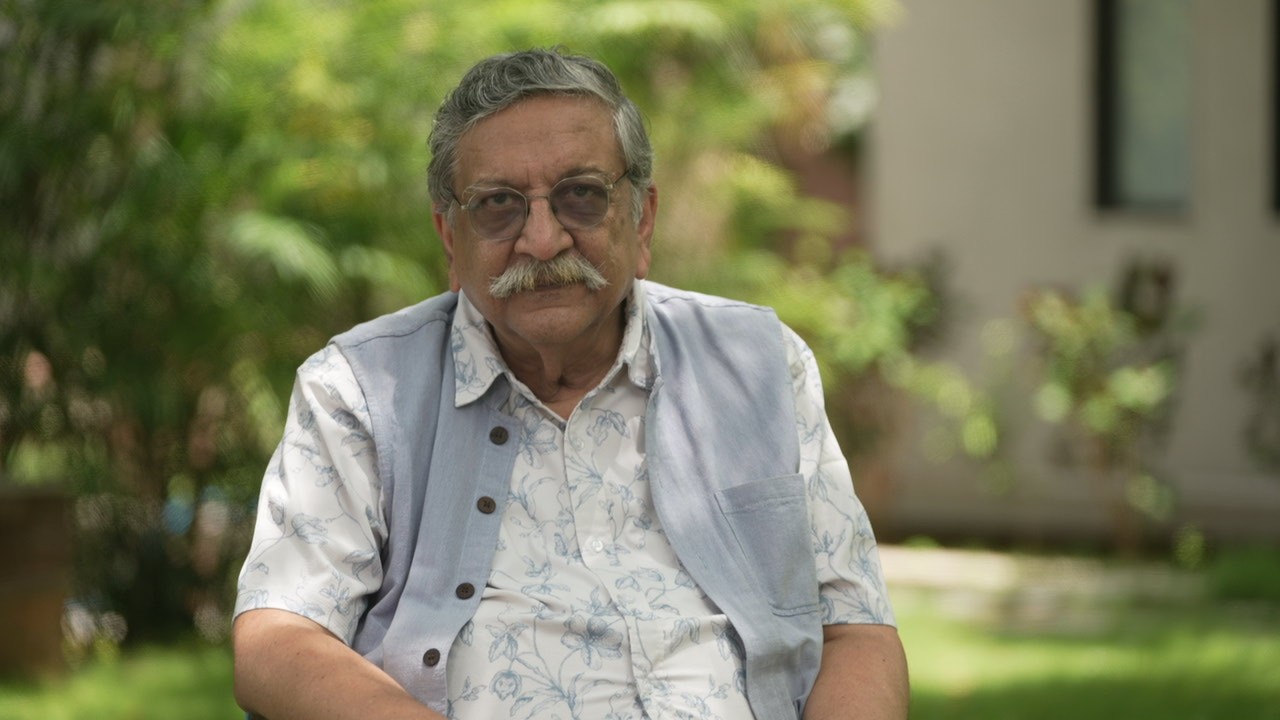
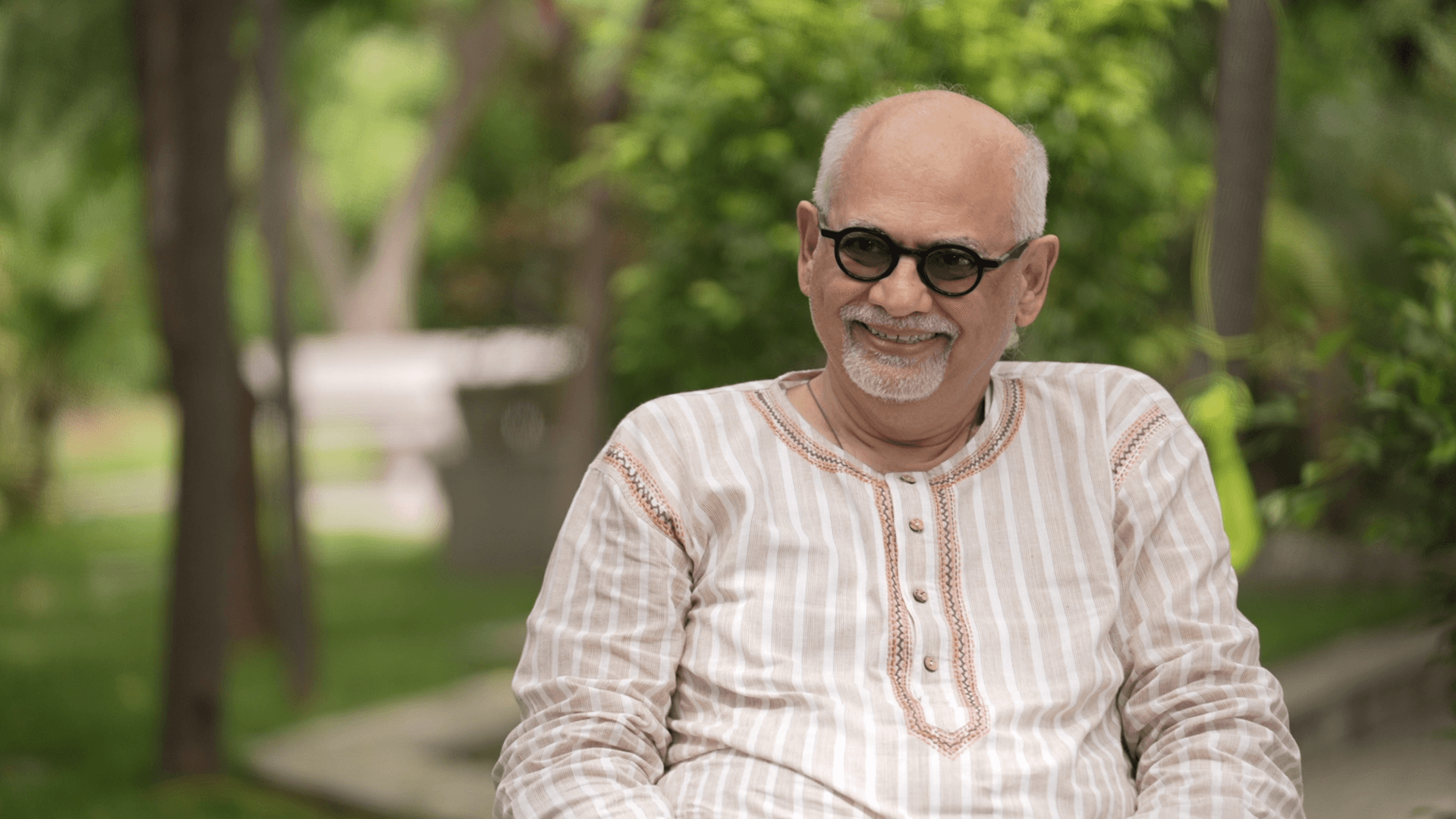
In this episode of Unmute, hosts Gagan Sethi and Minar Pimple are joined by Apoorva Oza, a development practitioner with decades of experience in rural development and institution-building, and Professor Dipa Sinha, a development economist whose work engages with food, nutrition, gender, and social policy. Together, they examine a longstanding debate within civil society: are service delivery and the struggle for rights competing approaches to development, or can they reinforce each other in the pursuit of social change?
Drawing on experience from grassroots, organizations, women’s collectives, rural development programmes, and academic research, the conversation explores how professionalization, funding pressures, managerial approaches, and the demand for measurable outcomes are reshaping the development sector. It questions whether the language of targets, scale, and beneficiaries is displacing the deeper work of building citizenship, agency, and collective power. Through a critical discussion of self-help groups, women’s land rights, patriarchy, and livelihood creation, the episode examines when development interventions enable people to exercise greater control over their lives, and when they risk reproducing existing inequalities.
The conversation also considers the tensions between scale and quality, standardization and local context, and institutional efficiency and democratic participation. It asks what it means to build organisations that remain accountable to communities, recognise their own limitations, and work in partnership with movements, public institutions, and other organisations. Looking at the changing relationship between the State, the market, and civil society, the speakers reflect on the possibilities for social change amid growing inequalities and shrinking spaces for collective action.
At its heart, this episode returns to a fundamental question: how can civil society combine care with courage, constructive work with struggle, and institutional effectiveness with a commitment to justice? It argues for development practices that do more than deliver services, practices that enable communities to shape their own agendas, challenge unequal power relations, and emerge as agents of change.
Key Highlights
Service Delivery and Rights: Beyond the Either-Or Debate
The conversation opens with a longstanding question within civil society: should organisations focus on delivering essential services, or on mobilizing people to claim their rights? Drawing on Gandhi’s emphasis on the relationship between struggle and constructive work, the discussion challenges the assumption that these approaches must be separate. It asks how service delivery, innovation, rights-based mobilization, and collective action can complement one another while remaining rooted in a shared commitment to social transformation.
Personal Journeys and the Making of Development Practitioners
Apoorva Oza and Deep Sinha reflect on the experiences that shaped their professional journeys. Dipa discusses the influence of her family, economics education, and student politics at JNU, as well as her involvement in collective initiatives such as the Right to Food Campaign. Apoorva recalls how his engineering background, exposure to rural life, and experiences working with farmers transformed his understanding of development. These accounts underline the importance of lived experience, intellectual engagement, and a sense of purpose in shaping development practice.
From Care to Courage: What has Changed in Civil Society?
The discussion examines how civil society organisations have changed as development has become increasingly professionalised and project-oriented. Apoorva emphasizes that caring organisations and staff remain central to meaningful development work, but identifies three challenges: the sector’s failure to adequately communicate its contributions, it growing acceptance of corporate-style managerial systems, and its dependence on shrinking external resources. Dipa adds that care must be accompanied by courage and an explicitly political understanding of social change, not party politics, but the willingness to question power and inequality.
From Beneficiaries to Citizens: The Question of Agency
The language of development increasingly describes people as beneficiaries of programmes rather than citizens asserting their rights. The conversation questions whether this shift changes the relationship between organisations and the communities they serve. Genuine care, the speakers argue, should not create dependence on an organisation; it should enable people to act independently, exercise agency, and develop their own leadership. The emergence of community leaders who can participate in decision-making spaces without depending on NGOs is presented as a more meaningful measure of success than the number of people reached.
Professionalisation, Managerialism, and the Politics of Development
The growing influence of managerial approaches has changed how development organisations define leadership, accountability, monitoring, and institutional performance. While management systems can improve organizational effectiveness, the discussion cautions against treating them as universally applicable solutions. When project execution and technical expertise displace community engagement and political analysis, organisations risk the distinctive contributions that civil society brings to development. The question is not whether organisations should be professionally managed, but what values and purposes their management systems serve.
Can Scale and Quality Coexist?
Drawing on Apoorva’s experience at the Aga Khan Rural Support Programme (AKRSP), the conversation examines whether expanding the reach of development programmes necessarily compromises quality. His account highlights the importance of empowering field staff, treating their knowledge as authoritative, and allowing programmes to evolve through experience. Work across Gujarat, Madhya Pradesh, and Bihar generated learning precisely because local conditions differed. Dipa reinforces the point that scale becomes problematic when organisations replicate a blueprint without preserving the processes that enable participation and local decision-making.
Standardisation versus Local Context: The limits of Uniform Models
As organisations grow, donors, and institutional systems often encourage standard operating procedures, uniform indicators, and comparable outcomes. The conversation questions whether such standardisation can adequately account for the diversity of communities and development contexts. Apoorva’s examples, from locally determined holidays to adapting agricultural and livelihood interventions illustrate how context can shape institutional practice. Dipa adds that even apparently successful models lose their transformative potential when governments or large organisations reproduce their structures but disregard the participatory processes that made them effective.
Women’s Collectives: Empowerment or Instrumentalisation?
Self-Help Groups (SHGs) occupy a central place in the discussion. Dipa acknowledges the importance of women’s collectives in enabling women to leave their homes, build solidarity, and challenge patriarchal restrictions. However, she questions what happens when these collectives become primarily transactional mechanisms for savings, credit, or implementing government programmes. Women’s unpaid labour may be mobilized for community and state objectives without challenging the gendered distribution of power and work. Apoorva offers a complementary perspective, arguing that SHGs can serve as platforms from which women move towards wider struggles, including land rights, when organisations support the transition.
Feminist Practice: Transforming Institutions, Not Just Including Women
The conversation broadens the understanding of gender justice beyond women’s participation in programmes. Feminist practice involves recognising women’s work, challenging gendered divisions of labour, and creating spaces where people can deliberate, disagree, and make collective decisions. An organisation can not necessarily be considered empowering simply because it works with women. Its internal processes, distribution of authority, and treatment of staff and communities must also challenge hierarchical and patriarchal relationships. The discussion emphasises that the way organisations work is inseparable from the social change they seek.
Self-Help Groups, Credit, and the Limits of Livelihood Creation
The discussion raises a fundamental economic question: can savings and credit groups provide a sufficient response to women’s livelihood and employment challenges? Dipa questions the wider economic arrangements under which poor women may face high borrowing costs while larger businesses access cheaper credit. She argues that local livelihood initiatives cannot, by themselves, overcome structural problems in employment generation and economic inequality. Apoorva highlights how the effectiveness of SHGs varies according to how they organized and supported. Together, these perspectives distinguish the value of collective organisation from the assumption that microcredit alone can resolve broader economic problems.
Constructive Work and Struggle: Building on Each Other’s Strengths
Apoorva recounts an experience with a Gandhian activist who had helped landless Dalit labourers secure land. The struggle had achieved an important rights-based outcome, but the land remained unproductive because families lacked irrigation, fencing tools, and credit. Collaboration with AKRSP helped address these constraints, enabling farmers to cultivate the land and improve their economic circumstances. The example illustrates how rights-based struggles and constructive development work can complement each other. It also establishes an important principle: organisations should seek partnerships when other institutions have the expertise needed to advance the community’s interests.
Community-Centered Development and Organisational Learning
What does it mean to be genuinely community-centered? The discussion moves beyond the phrase to consider the organisational practices required to make it meaningful. Apoorva emphasises the importance of field engagement, locally responsive decisions, and leadership that values community-level knowledge. He also cautions against romanticizing communities as inherently harmonious or free of inequality. Effective development requires recognising both their strengths and internal hierarchies, supporting collective growth, and gradually enabling communities to exercise greater control over institutions and decisions that affect them.
Technology, Changing Aspirations, and Emerging Inequalities
Technology can expand opportunities, but it can also reproduce exclusion when access to devices, skills, and infrastructure remains unequal. Apoorva reflects on initiatives to improve digital access and training in tribal areas, including the programme Computer Ji, Jode Duniya Se. The discussion also stresses that communities are not static: younger generations face changing aspirations, shrinking landholdings, and the need to explore new forms of employment. Development programmes must therefore adapt to changing circumstances rather than remain attached to established models.
Decentralisation, Public Institutions, and the Role of the State
The conversation questions whether institutions genuinely transfer decision-making power as they expand. Decentralisation without the devolution of authority or resources can leave existing hierarchies intact. Drawing on experiences with village institutions and Panchayati Raj, Apoorva argues for deeper engagement with local governance rather than treating public institutions as obstacles. The discussion also raises concerns about centralisation and the weakening of spaces in which communities can influence public decisions. Strengthening democratic participation requires both capable organisations and public institutions that enable people to exercise authority.
Patriarchy, Representation, and Institutional Accountability
The speakers turn the lens inward to ask whether civil society organisations practice the inclusion and affirmative action they demand from the State and society. Apoorva reflects on efforts to expand the participation of people from tribal communities within organisational teams and leadership. The discussion emphasises that representation is not only about whom organisations serve, but also about who holds positions of authority, shapes institutional priorities, and participates in decision-making. Challenging structural inequality requires examining organisational practices alongside external advocacy,
The Changing Relationship Between State, Market, and Civil Society
The conversation returns to the wider political economy of development. Dipa highlights how inequalities in education, employment, and access to resources are reinforced when market priorities shape public policy. She raises concerns about the growing divide between those who can access high-quality services and those who struggle to secure basic public provision. Apoorva, while acknowledging the constraints, argues that civil society must continue engaging with elected representatives, local governments, and even flexible corporate social responsibility initiatives. The discussion suggests that disengagement cannot be the answer: organisations must find ways to influence institutions while retaining their independence and critical voice.
Community Leadership, Collective Action, and Sources of Hope
Despite concerns about inequality, centralization, and shrinking spaces for civil society, the speakers identify reasons for hope. Dipa points to the emergence of young women, Dalits, and Muslims who are asserting leadership and connecting questions of discrimination with broader concerns about education and employment. Apoorva reflects on the importance of movements that enable communities to articulate their own demands. Civil society’s role, he argues, is not to speak permanently on behalf of communities, but to support them in developing their own agendas and then make space for their leadership.
Care, Concern, and the Search for Meaning
The episode concludes by returning to the values that sustain development work. Care without courage can become paternalistic, while institutional efficiency without concern for justice can reduce social change to project delivery. The conversation also recognises that development practice involves uncertainty and unresolved dilemmas. Rather than seeking simple answers to complex questions, organisations must remain willing to reflect, acknowledge what they do not know, and learn collectively. The search for meaning, the speakers suggest, lies in sustaining work that combines empathy, critical engagement, and a commitment to enabling others to exercise their agency.
References & Resources
Apoorva Oza: https://www.akrspindia.org.in/web/aboutus/leadershipdetail/434b5375652b6e554f383439587958622f51636a59513d3d
Dipa Sinha: https://azimpremjiuniversity.edu.in/people/dipa-sinha
Aga Khan Rural Support Programme (India): https://www.akrspindia.org.in/web/home
Aga Khan Development Network (AKDN): https://the.akdn/en/home
Right to Food Campaign: https://www.righttofoodcampaign.in/
Centre for the Study of the Indian Economy (CSIE):
https://azimpremjiuniversity.edu.in/centre-for-the-study-of-the-indian-economy-csieKutch Mahila Vikas Sangathan: https://kmvs.org.in/
Sahjeevan: https://sahjeevan.org/
NREGA Sangharsh Morcha: https://www.instagram.com/nrega.sangharsh.morcha/?hl=en
Heterodox Economics: https://www.tandfonline.com/doi/full/10.1080/00213624.2023.2273130#d1e405
Institute of Rural Management Anand (IRMA): https://www.irma.ac.in/about-irma/knowing-irma
Dr. Verghese Kurien: https://drkurien.com/
Aloysius Fernandez: https://idronline.org/features/idr-interviews/interview-with-aloysius-fernandez-pioneer-of-self-help-groups-in-india/
Ushaben Wasawa: https://mr.wikipedia.org/wiki/%E0%A4%89%E0%A4%B7%E0%A4%BE%E0%A4%AC%E0%A5%87%E0%A4%A8_%E0%A4%B5%E0%A4%B8%E0%A4%BE%E0%A4%B5%E0%A4%BE
Bina Agarwal: https://www.binaagarwal.com/books.htm
Women’s land rights in India: What’s missing from our land laws?: https://idronline.org/article/gender/womens-land-rights-in-india-whats-missing-from-our-land-laws/
Kudumbashree: https://www.kudumbashree.org/
Collective Farming, Kudumbashree: https://kudumbashreestory.in/index.php/programmes/economic-empowerment/collective-farming
JEEViKa Didi: https://brlps.in/Ihome
Chunibhai Vaidya: https://thewire.in/economy/mithivirdi-movement-gujarat
Chunibhai Vaidya: https://www.governancenow.com/news/regular-story/among-last-gandhians-97-yr-old-fights-farmer-rights-modi-land
National Rural Livelihoods Mission (NRLM): https://nrlm-mis.lokos.in/outerReportAction.do?methodName=showIndex#gsc.tab=0
Panchayati Raj: https://panchayat.gov.in/en/
Nothing about us without us: https://en.wikipedia.org/wiki/Nothing_about_us_without_us
Constitution of India:
https://www.legislative.gov.in/static/uploads/2025/07/ca7ce5c746fa7480804bbdeb6cb704f0.pdf
Question of Cities: https://questionofcities.org/
Guests
Dipa Sinha is a development economist interested in economic and social policy in India. Her areas of expertise include social policy, food and nutrition rights, public health and gender. She has worked on field studies evaluating the Public Distribution System, child-related nutrition programmes and maternity entitlement schemes.
She worked with the Office of Commissioners to the Supreme Court on the Right to Food as a senior researcher and adviser, engaging with state and union governments on welfare schemes. She is also part of the Right to Food Campaign India and has contributed to multi-country research projects, including the Palanpur Longitudinal Village Studies and Food Riots and Food Rights.
She was a member of the report on Nutrition and Food Systems of the High-Level Panel of Experts of the Committee on World Food Security, FAO. Dipa has taught at Ambedkar University Delhi for almost ten years. She holds an MA and PhD in Economics from Jawaharlal Nehru University, New Delhi, and an MSc in Development Studies from the School of Oriental and African Studies (SOAS), London. She is currently working with Azim Premji University.
Apoorva Oza has extensive experience in rural development and programme management. He joined AKRSP (India) as a Programme Coordinator in 1988 and served as its Chief Executive Officer from 2001 to 2022. He is currently the Global Programme Lead in Agriculture and Climate Resilience at the Aga Khan Foundation.
He is a trustee of several NGOs, including the Society for Women’s Action and Training Initiative (SWATI), WaterAid (India) and Arid Communities and Technologies (ACT). He is also a founding trustee of NGO networks such as Pravah, Sajjata Sangh and Charkha.
Apoorva is a mechanical engineer with a diploma in rural management from the Institute of Rural Management Anand (IRMA). He has also completed a course on Strategies for Change: Managing NGOs at Cranfield University, United Kingdom, and a three-month course at Cornell University, USA.
Hosts
Gagan Sethi: Development practitioner and social justice advocate with 40+ years of experience in organisational development, policy advocacy, and minority rights.
Minar Pimple: Human Rights Advocate, Development leader and Founder of YUVA (Youth for Unity and Voluntary Action), and former Senior Director at Amnesty International, Regional Director-Asia Pacific (UN Millennium Campaign) and Founding Chair, Oxfam India.